
How Residential Fencing Improves Privacy, Security, and Curb Appeal
You step into your backyard with your morning coffee, and there it is again. The upstairs window next door looks straight down onto your patio, a car slows on the street while your dog drifts toward the open edge of the lawn, and the space that should feel like yours feels watched and unfinished. If that sounds familiar, here is the part most homeowners miss. The right fence solves all three of those problems at once, privacy, security, and the look of your property, but only when it is planned that way from the start.
A fence thrown up to block one nosy neighbor often leaves footholds a person could step over, or boxes in your yard so tightly that the front of your home looks like a wall. After walking hundreds of yards, the pattern is clear. The ones that feel calm, safe, and finished are where height, material, layout, and design get decided together, not bolted on one fix at a time. This guide walks you through how to get all three working for you.
How the Right Fence Gives You Real Privacy
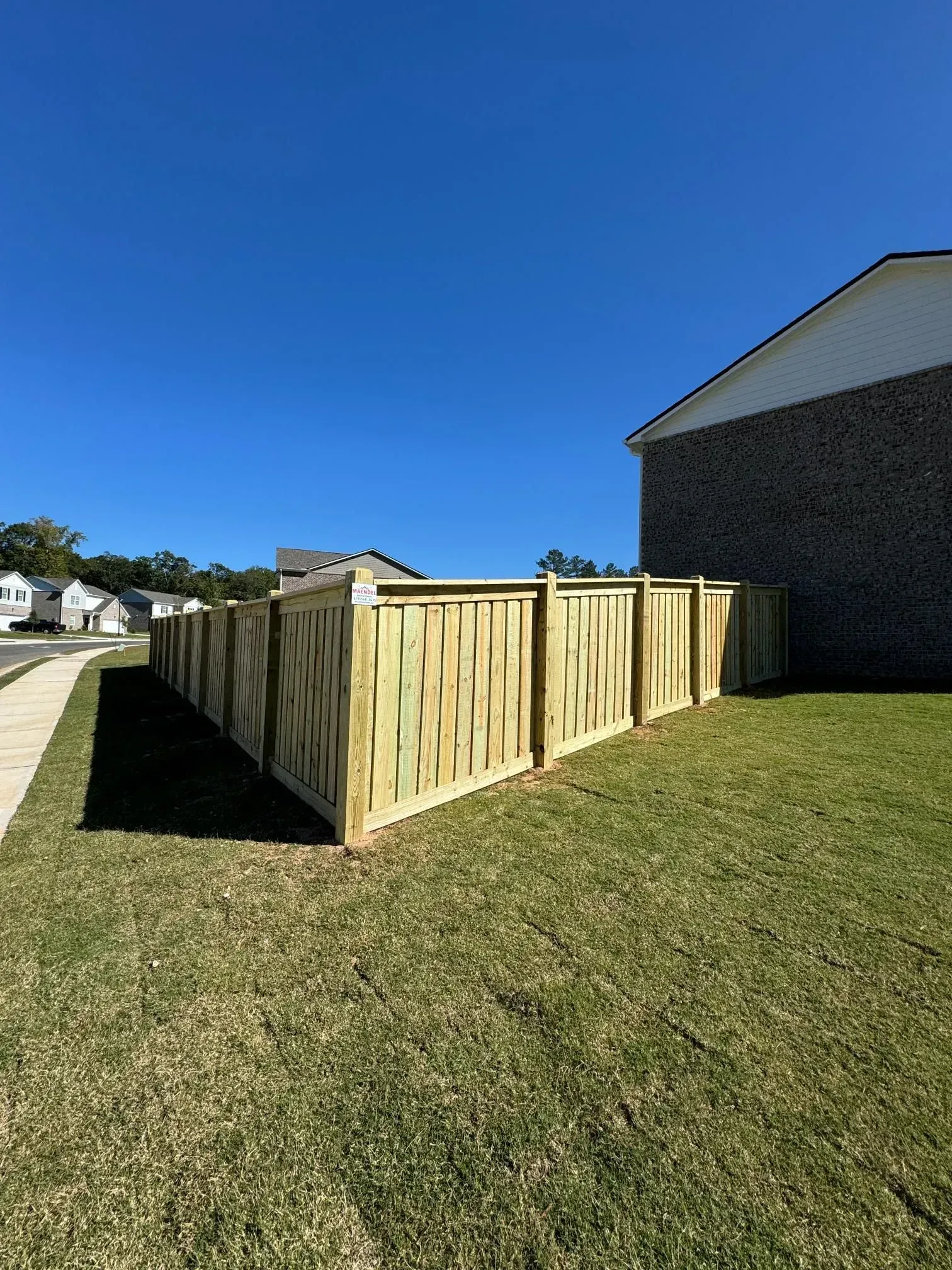
Privacy comes down to two decisions you make before a single post goes in: height and the gap between boards. A six foot solid panel blocks sightlines from the ground and from most first floor windows, which covers the majority of what bothers people. When a neighbor sits higher than you, on a sloped lot or a raised deck, that same six foot fence leaves your patio in full view. On those lots we raise the line to the tallest height your layout allows, or add a lattice topper that lifts the screen another foot without making the yard feel closed in.
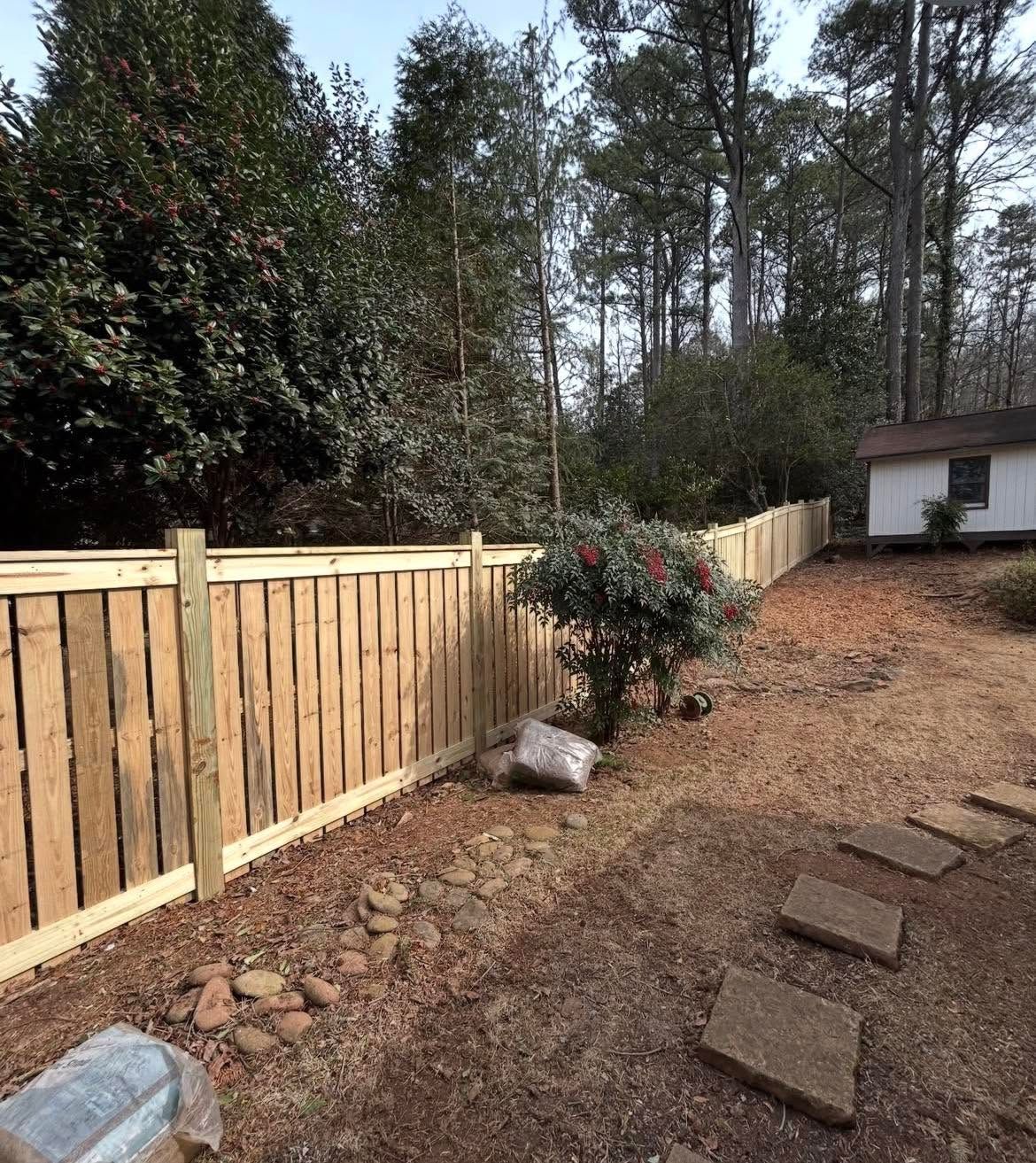
Board spacing matters just as much. A privacy fence with even a quarter inch gap between boards still lets eyes and headlights slip through at an angle. We set boards tight, or overlap them in a board on board pattern so the wood can move with the seasons without opening a sightline. In our humid summers wood swells and shrinks all year, and a fence built with no room for that movement will buckle or crack open gaps you never planned for. Building in that room is what keeps privacy from failing by the second summer.
Security That Actually Keeps People Out
A fence improves security the moment it removes the easy, casual entry into your yard, and the details decide how much. Most people will not climb a six foot fence in plain view of the street, so the goal is to remove footholds, not add height. That means no horizontal rails on the outside face to step on, nothing low left leaning against the fence line, and a gate that latches from the inside.
On service calls we see the same weak point again and again: the gate. Homeowners put in a strong fence, then hang a gate that sags within a year or uses a thumb latch anyone can reach over and flip. We hang gates on three heavy hinges, set the gate posts in deeper footings than the rest of the run, and add a lockable latch where security matters. A solid panel also hides the view into your yard, so no one can see whether a door is open or the grill is out. That alone does more for security than most homeowners expect.
Curb Appeal: The Fence Is the First Thing People See
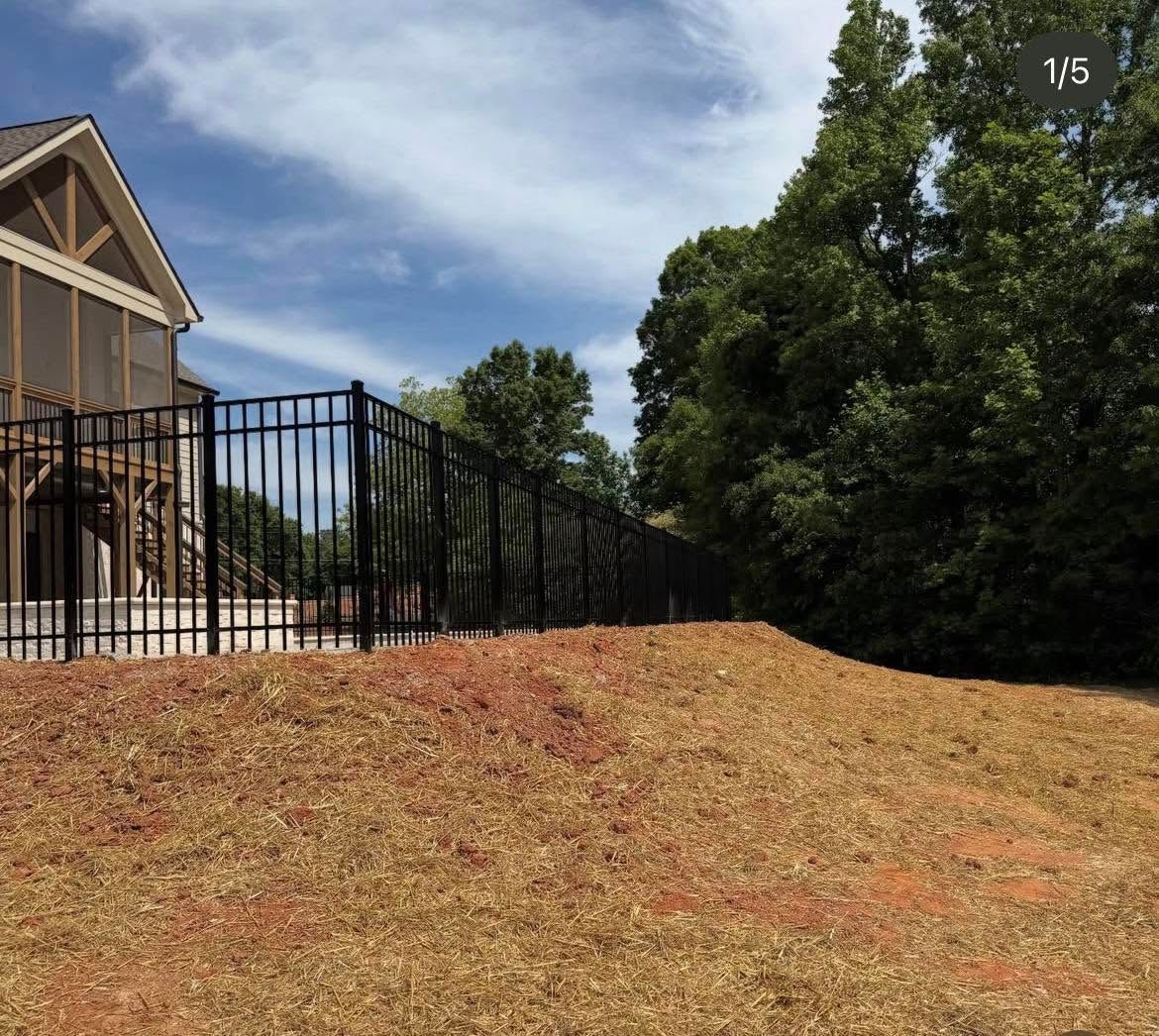
Curb appeal is where a fence earns its keep, because the line around your yard frames the front of your home the way a mat frames a photo. A fence that matches the scale and style of your house pulls the whole property together, while one chosen only to block a view can flatten the look of an otherwise sharp home. The material and color should answer to the house, not fight it. Black aluminum reads clean against brick. Warm cedar or smooth white vinyl softens a traditional front.
Small choices carry the look too. Post caps, a stepped top rail that follows a sloped yard cleanly instead of breaking into awkward gaps, and a gate that becomes a real entry point rather than an afterthought all signal care. We watch how the fence meets the front corner of the house and the driveway, the first thing anyone notices from the curb. A fence that reaches the front gracefully lifts the whole property. One that ends in a blunt, mismatched post drags it all down.
Choosing a Material That Survives Our Weather
The best material for your fence depends less on looks than on how it holds up in our climate, and that is where local experience matters most. Our summers run hot and humid for months, our red clay soil holds water and shifts as it dries, and pollen and storm debris coat everything every spring. Each of those works on a fence in its own way.
Wood gives you warmth and easy privacy, but in our humidity it needs sealing and must stay off direct soil contact, or the bottom boards wick moisture and rot within a few years. Vinyl shrugs off moisture and pollen and rinses clean, a strong pick for low upkeep, though lower grade panels grow brittle after long sun exposure. Aluminum handles our wet seasons without rusting and suits both security and curb appeal, though it will not block sightlines on its own. The clay underfoot matters too. Posts set shallow in soil that swells and shrinks will heave and lean, so we set footings deep enough to stay below the moving ground.
Where Most Homeowners Go Wrong
Most fence problems we get called to fix trace back to a handful of understandable shortcuts. The most common is setting posts too shallow. It feels solid the day it goes in, but our clay heaves with every wet and dry cycle, and a post set only a foot or so down will lean within a season or two. Posts that reach well below that line stay put for years.
Skipping a sealer on a new wood fence is another. The fresh wood looks protected, so the step gets put off, and by the next humid summer the boards have started to gray and check. Sealing within the first few weeks, then again on a regular cycle, adds years to the wood. The last common miss is guessing at the property line, then building a foot inside it and losing usable yard, or worse, crossing it and having to move the whole run. None of these come from carelessness. Each comes from a fence looking finished long before the hidden parts are doing the work you cannot see.
Frequently Asked Questions
How tall should a privacy fence be?
Six feet blocks most ground level and first floor sightlines, which suits the majority of yards. On sloped lots, or where a neighbor sits higher than you, we raise the line or add a lattice topper so your patio stays comfortably out of view.
Which fence material lasts longest in our humid climate?
Vinyl and aluminum handle our moisture and pollen with the least upkeep. Sealed wood performs well too, but it needs regular care to resist rot through our long, humid summers. Your best choice depends on the look and privacy you want.
Will a fence really make my yard more secure?
Yes. A solid six foot fence removes the easy, casual entry into your yard and hides what is inside from view. The gate matters most, so we hang it on heavy hinges with a latch that locks from the inside.
Does a new fence add curb appeal or hide the house?
Done right, it frames your home and lifts the whole property. Trouble starts when a fence is chosen only to block a view. Matching the material, color, and scale to your house keeps the front of your home looking sharp.
How do you keep fence posts from leaning in clay soil?
Our red clay swells and shrinks with moisture, which heaves shallow posts and tips them over. We dig footings well below that moving zone and set the posts properly, so your fence line stays straight and solid for years.
Proven Local Craftsmanship Built Into Every Fence
The single principle worth remembering is this: privacy, security, and curb appeal are not three separate projects but three results of one well-planned fence, decided together before the first post goes in. That matters more here than most places, because our humid summers, red clay, and shifting soil punish any fence built without them in mind.
With several
years of
fencing
and construction experience at Maendel Construction, LLC, we build fences across Gainesville, Georgia that get all three right the first time. If you are ready to make your yard feel private, secure, and finished, reach out and let us walk your property with you to plan the fence your home actually needs.