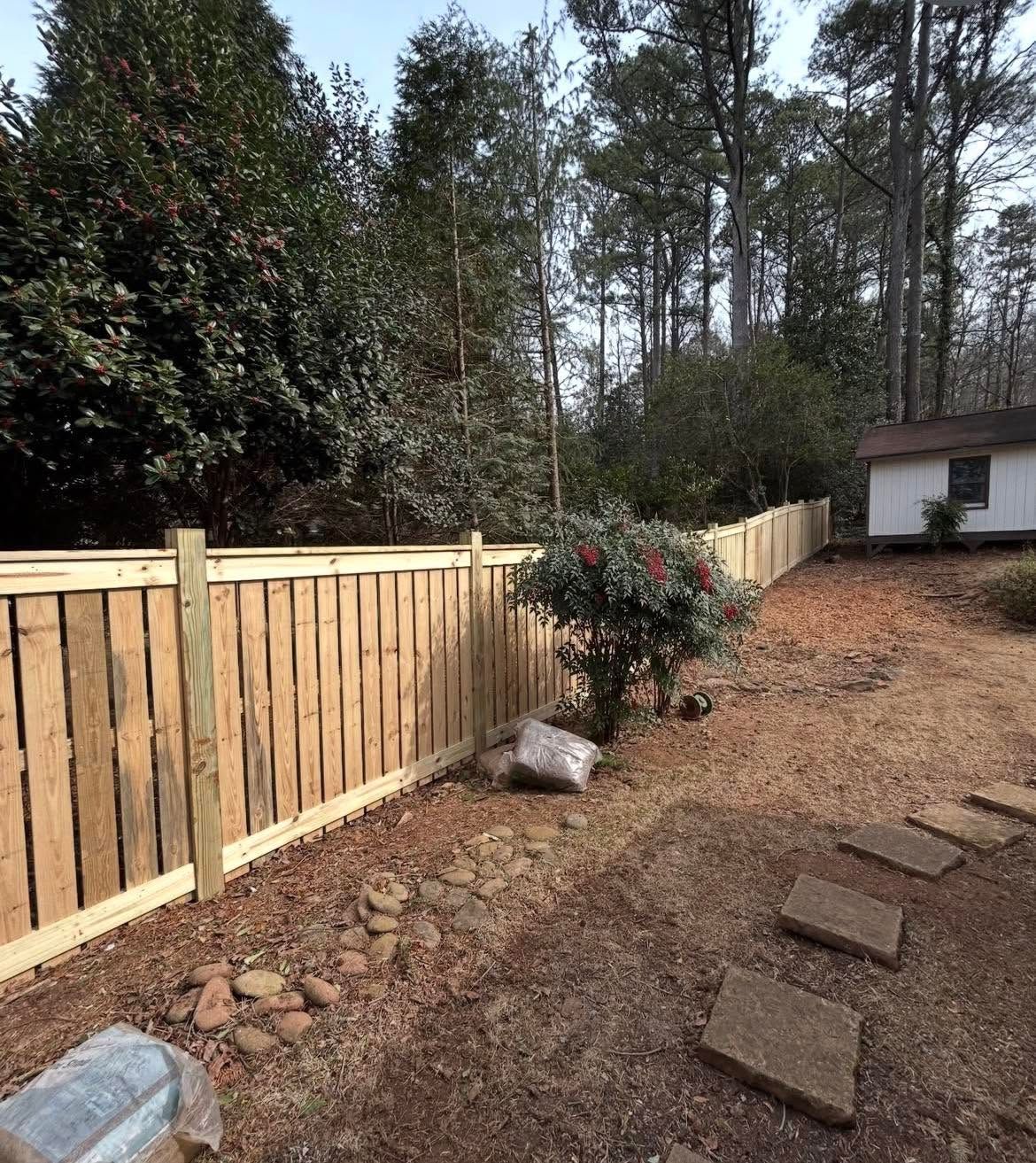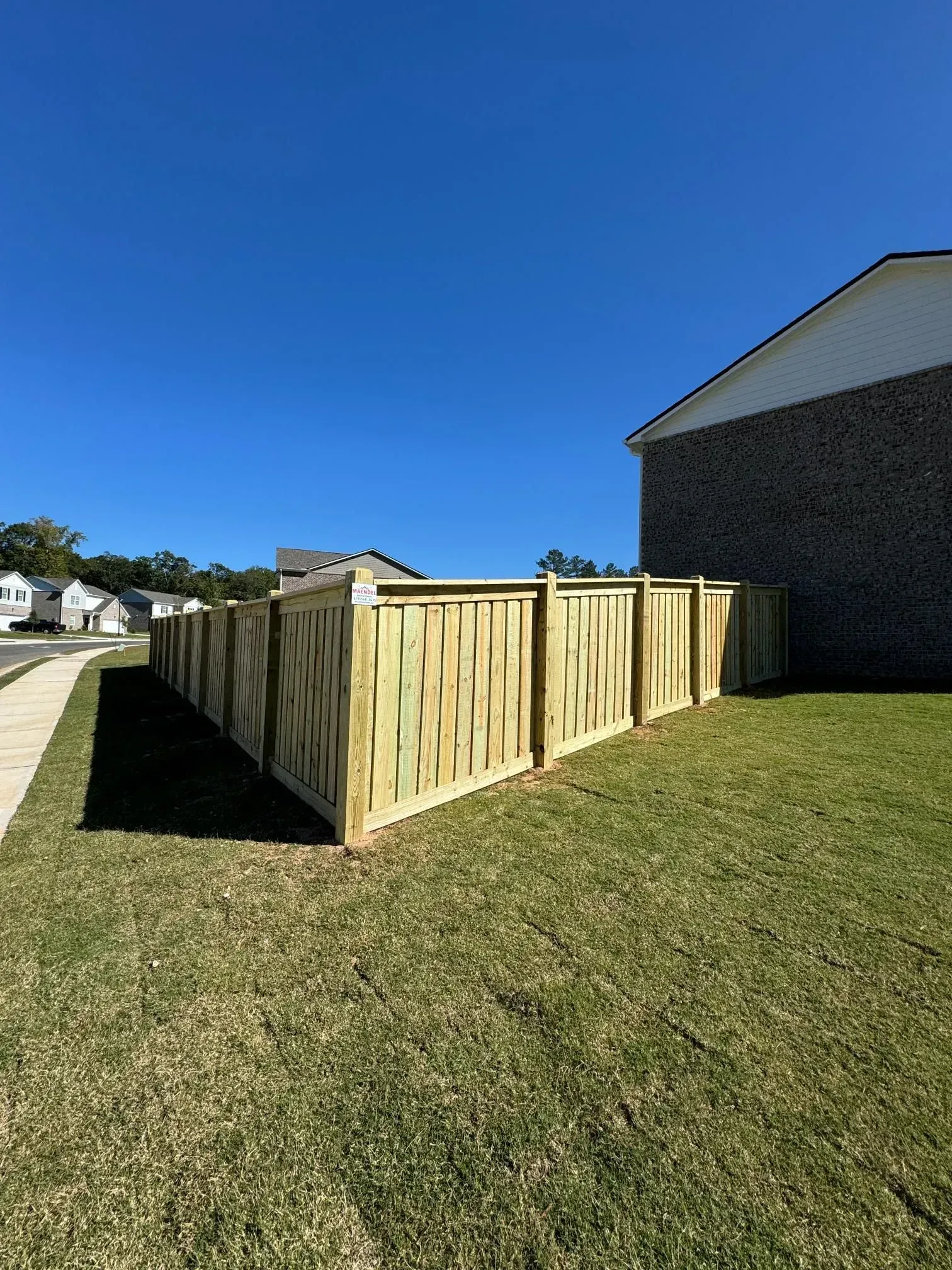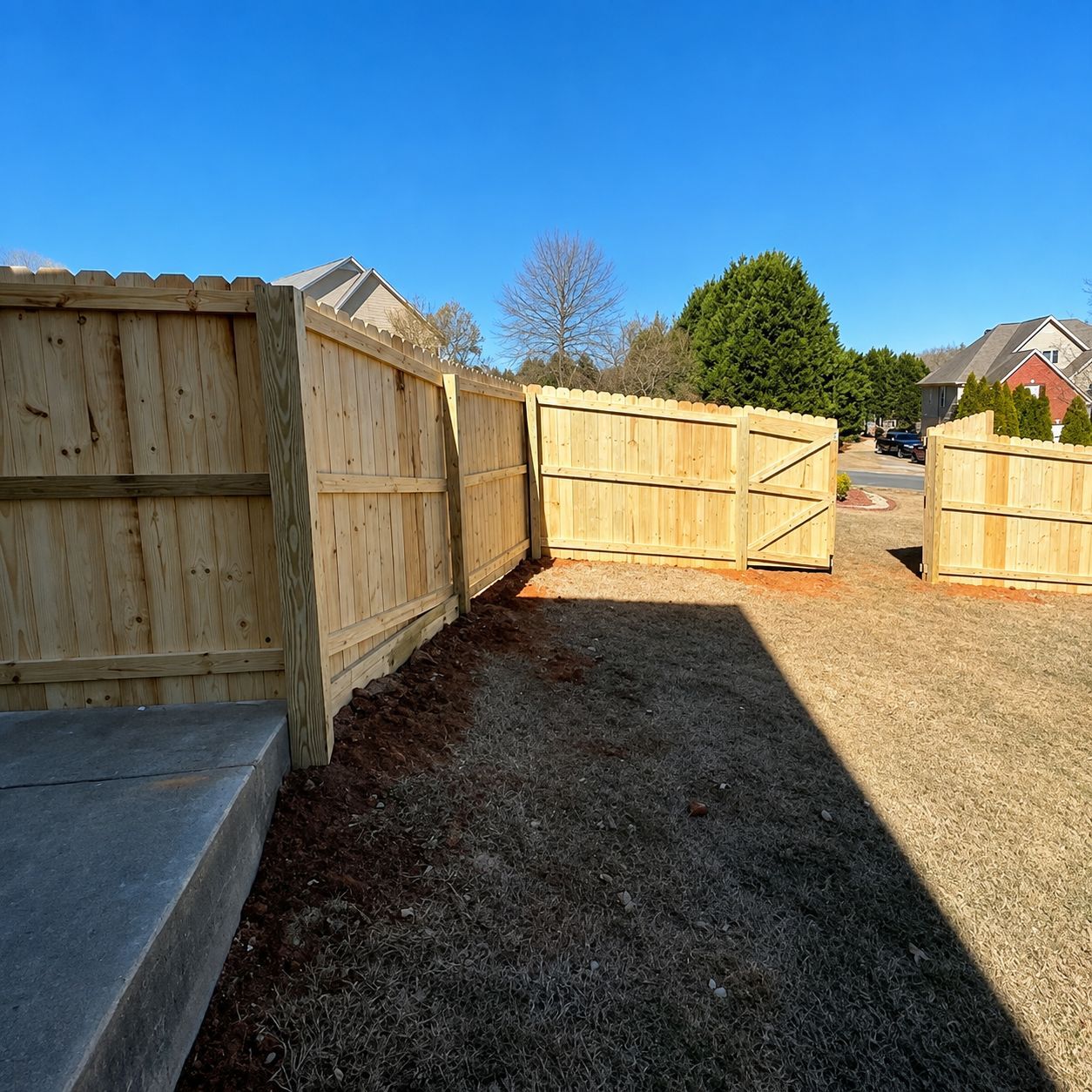

How Deep and How Far Apart Fence Posts Go in Red Clay Soil
Quick Answer: A fence post should be buried about one third of its total length, which for a standard 6 foot fence means a hole roughly 24 to 36 inches deep, plus a few inches of gravel at the bottom for drainage. Line posts sit 6 to 8 feet apart on center, tightened to 6 feet for tall or windy runs. In North Georgia's expansive red clay, go toward the deeper end of that range, set posts with gravel and concrete, and dig gate and corner posts 6 to 8 inches deeper than the line posts. Frost is a minor factor here, so clay movement and wind load drive the depth, not a deep freeze line.
Two fences can look identical the day they go up and tell completely different stories five years later. One still runs straight. The other leans, sags at the gate, and has a couple of posts you can rock by hand. Almost always, the difference is underground. It is in how deep the posts were set, how far apart they were spaced, and whether the crew respected what North Georgia red clay does to anything buried in it.
Post setting is the part of a fence nobody sees and the part that decides how long the fence lasts. In Gainesville and across Hall County, our soil makes that even more true than it is in a lot of the country. Get the depth and spacing right and a fence shrugs off storms and seasons for decades. Get them wrong and no amount of good lumber or nice hardware up top will keep the line from tilting. Here is how the numbers work and why the local dirt changes them.
The One Third Rule Sets the Baseline
The starting formula every fence crew works from is simple: bury about one third of the post's total length below grade. A 6 foot fence uses an 8 foot post, and one third of that puts roughly 32 inches in the ground. Most residential 6 foot fences land in a 24 to 36 inch hole because of this ratio. An 8 foot fence needs proportionally deeper posts, often around 48 inches.
That buried third is not arbitrary. It is what resists lateral load, the sideways force that wind puts on the panel above ground. A fence is a big sail. When wind pushes on it, the force tries to lever the post over, and the depth of the buried section is what fights back. Set a post too shallow and the panel wins that fight a little more with every storm until the lean becomes obvious.
Add A Few Inches Of Gravel Below The Post
A gravel base at the bottom of the hole does two jobs. It gives the post a stable, level surface to sit on, and it lets water drain away from the base instead of pooling against it. For a wood post, that drainage is what buys extra years before the wood at the bottom starts to break down. So a 6 foot fence often ends up in a hole closer to 38 inches once you count the gravel bed under the post.
Why Red Clay Changes the Math
Generic fence advice online treats every yard like the same neutral dirt. North Georgia does not cooperate. Our red clay is expansive, which means it swells when it soaks up water and shrinks as it dries. That shrink and swell cycle can move soil volume noticeably between a saturated spring and a dry August, and it repeats every year.
Clay Grips A Footing, Then Works It Loose
Dense clay grips concrete footings firmly, helping resist wind, but seasonal swelling and shrinking can gradually shift shallow or undersized footings. The solution is reaching below the most active movement zone and providing sufficient post depth, mass, and stability to remain properly aligned.
In Expansive Clay, Deeper Is The Safe Bet
When post depth calculations fall between 24 and 36 inches, expansive clay makes the deeper option preferable. A properly compacted clay installation with a concrete footing at roughly 36 inches provides greater long-term stability than a post installed only 18 inches deep.
Drainage Matters As Much As Depth
Posts installed in low areas that collect rainwater remain saturated longer, accelerating wood rot and increasing clay movement around the footing. Proper grading and sloping concrete away from the post help shed water, reduce pooling, and protect the installation from moisture-related problems.
Frost Is Not the Driver Here
In the northern half of the country, frost line depth overrides everything, because water freezing in the soil heaves posts upward an inch at a time until the fence tilts. That is why you see 42 to 54 inch holes in the Upper Midwest.
North Georgia is not that place. Our frost depth is shallow, rarely more than a handful of inches even in a cold snap, so frost heave is not the main force working on a fence here. That is genuinely good news for local fences: it means depth is governed by the one third rule and by clay movement rather than by a deep freeze line. A post set properly for wind load and clay in Hall County is already deep enough for our frost. The movement we design against is the wet and dry clay cycle, not freezing.
Spacing: How Far Apart Posts Go
Depth keeps a post from tipping. Spacing keeps the panel between posts from sagging. The standard for most wood and vinyl fences is 6 to 8 feet on center. Chain link and long ranch rail runs can stretch a little farther, often 8 to 10 feet.
Tighten The Spacing For Tall Or Windy Runs
Taller fences catch more wind, while heavier panels increase strain between posts. For tall privacy fences, exposed hilltops, or windy stretches, six-foot spacing adds posts and stiffens the line, reducing mid-span sag and improving long-term stability.
Corners, Ends, And Gates Carry Loads The Line Posts Do Not
Corner posts handle pulling forces from two directions, while gate posts support swinging weight daily. These posts should be deeper and often wider than line posts, typically extending six to eight inches deeper for added stability.
TIP: If your gate has started to drag or the latch no longer lines up, the problem is almost always the gate post, not the gate itself. A gate post that was set at line post depth is slowly leaning under the daily swing. Resetting it deeper and wider usually fixes a sagging gate for good.
Concrete or Gravel: When Each Makes Sense
Not every post needs a full concrete footing, but the ones under load do. A gravel base with well tamped backfill works for many line posts and helps wood drain. Concrete footings earn their place at gates, corners, terminal posts, and anywhere the panel is heavy or the wind is strong. In our clay, concrete around the load bearing posts gives them the mass to resist the seasonal soil movement that would otherwise nudge them out of line.
WARNING: Never pour fresh concrete around a wood post that is already rotted at the base. Encasing rotted wood in concrete traps moisture against the decay and speeds it up. The rotted section has to be removed or the post replaced before any new footing goes in, or you are just burying the problem.
Frequently Asked Questions
How deep should a fence post be for a 6 foot fence?
Plan on roughly 24 to 36 inches for a standard 6 foot fence, following the rule of burying about one third of the post's total length. In North Georgia's expansive red clay, aim toward the deeper end and add a few inches of gravel below the post for drainage.
How far apart should fence posts be spaced?
Most wood and vinyl fences use 6 to 8 feet on center. Chain link and ranch rail can go a little wider. For tall panels, heavy privacy fences, or windy runs, tightening to 6 feet stiffens the line and prevents sagging between posts.
Do fence posts need concrete in clay soil?
Load bearing posts benefit from it. Gates, corners, and terminal posts should be set in concrete for the mass to resist clay movement. Many line posts do fine with a gravel base and well tamped backfill, though concrete adds stability in expansive soil.
Why do fence gates sag over time?
The gate post is usually to blame, not the gate. A gate post set only as deep as the line posts slowly leans under the daily weight of a swinging gate. Setting gate posts 6 to 8 inches deeper and wider than line posts is what keeps a gate latching for years.
Does frost affect fence posts in Georgia?
Only slightly. North Georgia's frost depth is shallow, so frost heave is not the main force on local fences the way it is up north. Here, post depth is driven by wind load and by the shrink and swell of red clay, not by a deep freeze line.
Getting the Part You Cannot See Right
A fence is only as straight as the posts holding it, and the posts are only as good as the depth, spacing, and footing they were set with. In North Georgia, that means respecting what red clay does across the seasons: dig toward the deeper end of the range, space for the wind the run will catch, and set gates and corners deeper than the rest. Do that, and the fence stays true long after the crew has gone.
With several
years of experience setting posts in Hall County soil, Maendel Construction, LLC
treats the underground work as the foundation of the whole job, because it is. A fencing installation that starts with properly set posts is the one that still runs straight through years of wet springs, dry summers, and the storms that roll through Gainesville, GA. The boards and rails get the attention. The posts do the work.