
Wood vs. Aluminum vs. Chain Link: Matching Fence Material to the Job
Quick Answer: The right fence material comes down to what the fence has to do. Wood gives full privacy and a natural look but needs staining every few years and lasts roughly 15 to 20 years. Aluminum is the low upkeep option that lasts 30 to 50 years and suits pool and front yard lines, though it does not block views. Chain link is the least expensive to install, lasts 20 to 30 years with almost no maintenance, and works best for pet runs, back property lines, and commercial security where privacy is not the goal. Match the material to the job first, then compare price.
You walk the property line with a builder and the first question is always the same. What do you want this fence to actually do? Keep the dog in? Screen the neighbors? Wrap a pool? Mark a back boundary on a wooded lot off one of the roads near Lake Lanier? The answer changes which material makes sense long before price enters the picture. A fence that is perfect for a backyard in Flowery Branch can be the wrong call for a front line in Braselton.
Here in Gainesville and across Hall County, three materials cover the vast majority of residential and light commercial jobs: wood, aluminum, and chain link. Each one trades something for something else. None is best at everything. We install all three, and the conversation on the first visit is less about which is "better" and more about which one fits the job in front of us and the North Georgia conditions it has to survive.
Wood: The Privacy Standard, With a Maintenance Bill
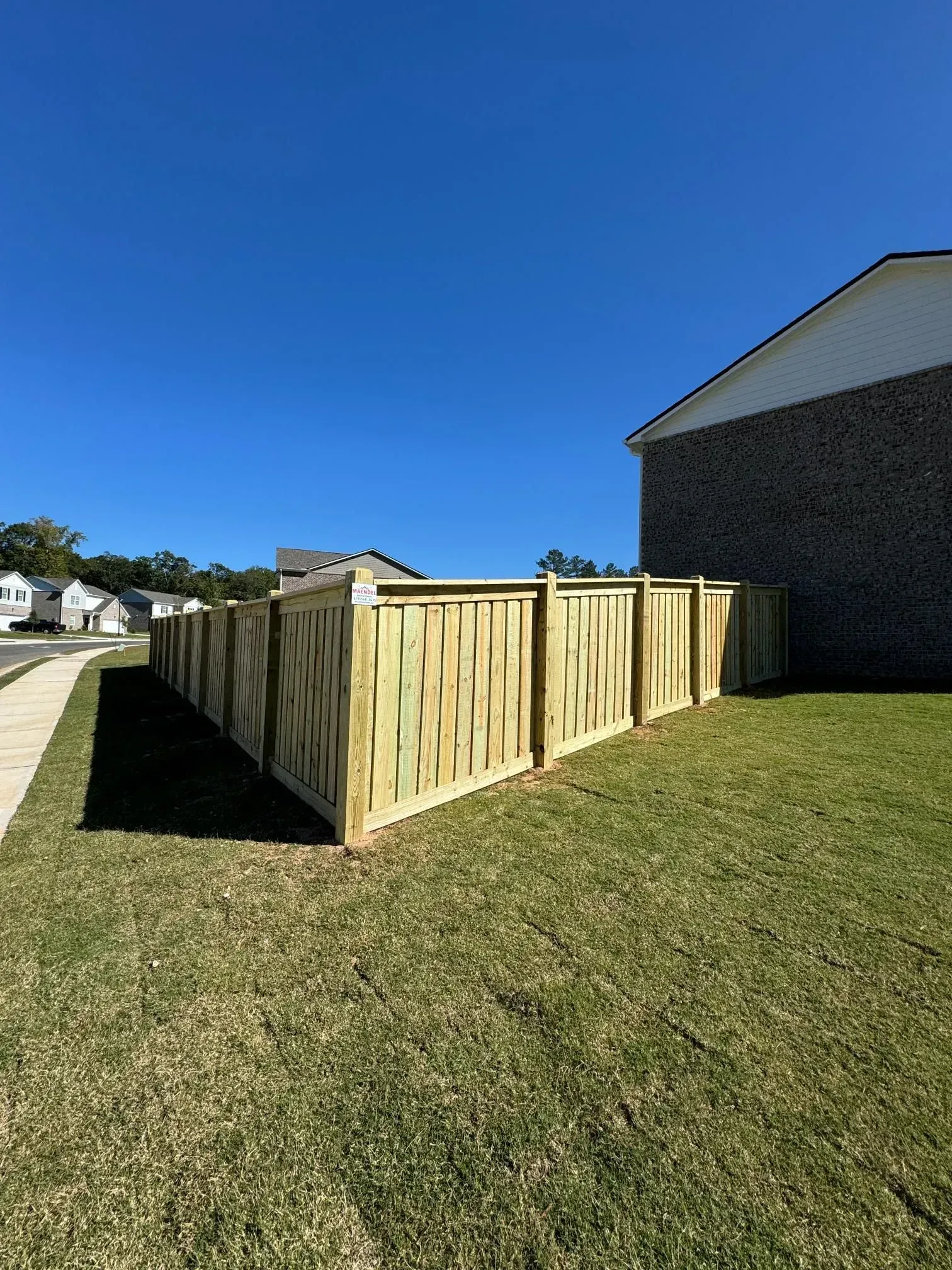
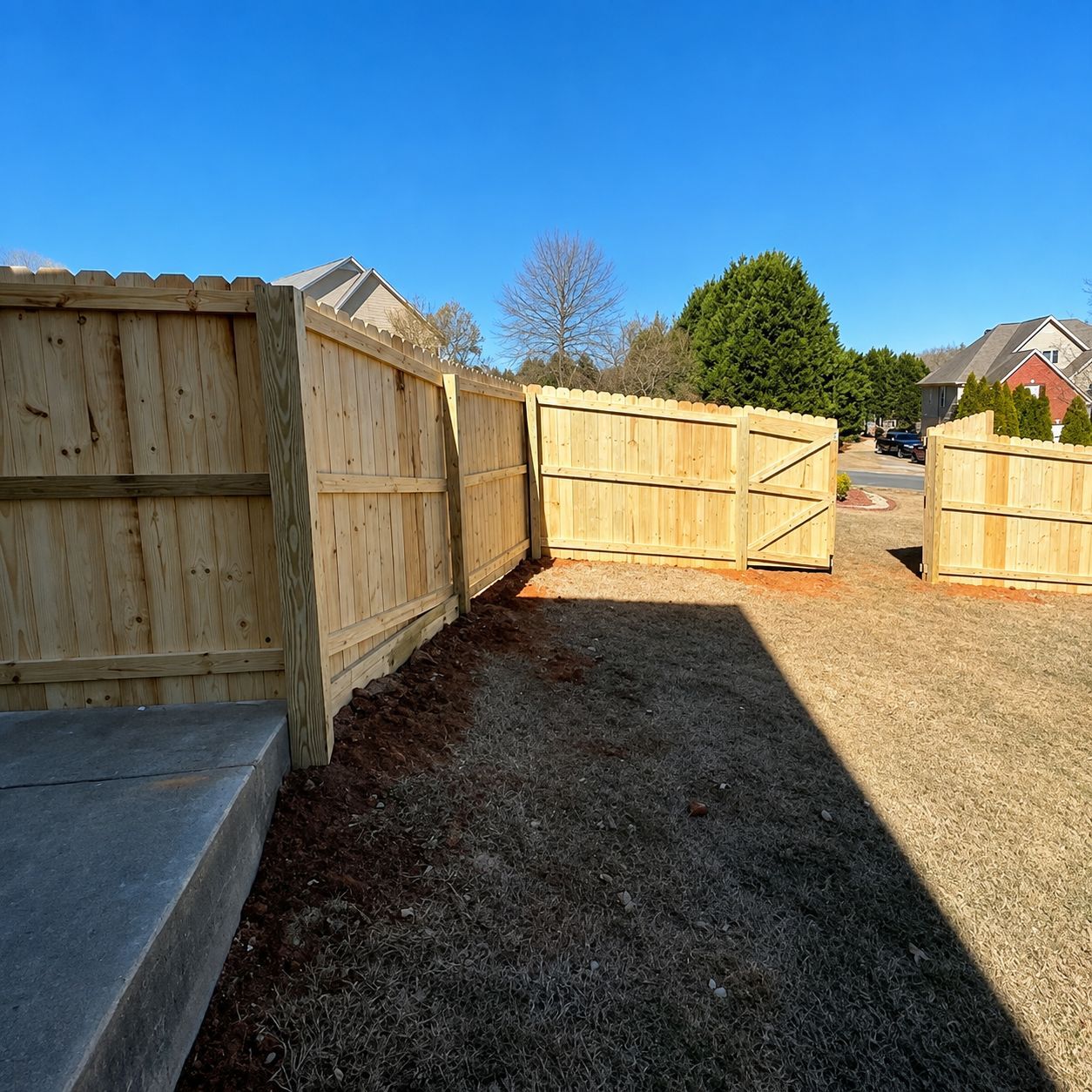
Wood is the go to when the goal is a solid visual barrier. A board on board or shadowbox privacy fence blocks sightlines completely, softens noise, and gives a yard the enclosed feel most homeowners picture when they think "fence." It also takes stain and paint, so the color is yours to choose and change later.
The trade is upkeep. Wood is the one material on this list that asks something of you every couple of years. Left bare, a wood fence in our humid climate turns gray, and the parts in contact with the ground start to break down. A wood fence generally lasts about 15 to 20 years, and hitting the top of that range depends on staining and sealing on a schedule rather than letting the weather have its way.
Our red clay soil is hard on the posts, not the boards
The pickets and rails usually outlast the posts, because the post sits in ground that swells when saturated after a storm and shrinks when it dries out in summer. That yearly push and pull works a poorly set post loose over time. Pressure treated pine rated for ground contact resists rot far longer than standard lumber, and a gravel base under the post lets water drain instead of sitting against the wood. Both matter more here than in a drier climate.
TIP: If privacy is the whole point but you want less maintenance than bare wood, ask about a solid stain rather than a clear sealer. A pigmented stain shields the wood from more of the sun and moisture that gray it out, and it stretches the time between refinishing.
Aluminum: Low Upkeep, Long Life, No Privacy
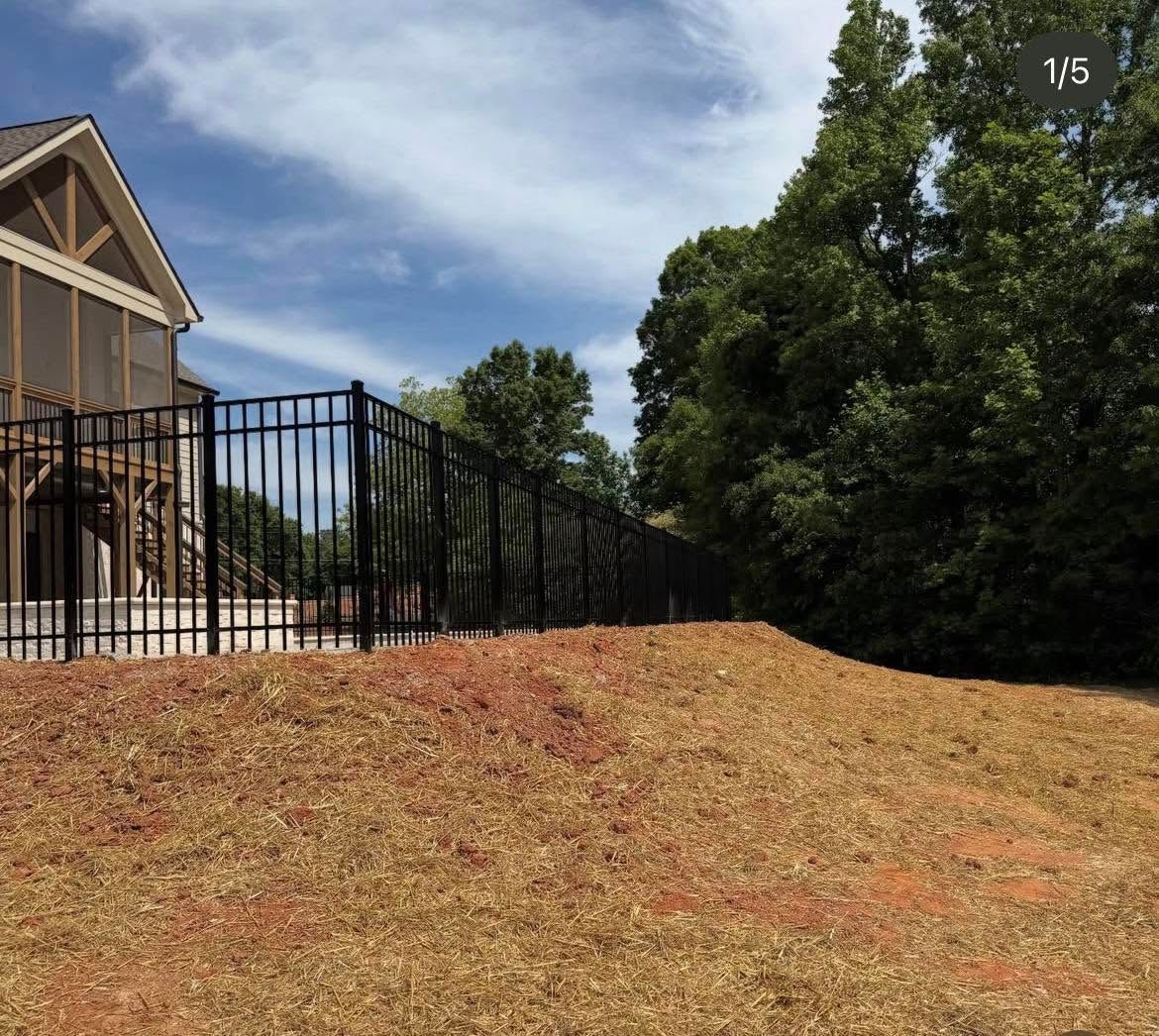
Aluminum fencing is the opposite bargain from wood. It gives up privacy and takes almost nothing in return over its life. It does not rust, does not need staining or sealing, and shrugs off the wet stretches that punish untreated wood. That is why it holds up so well in a humid, rain heavy setting like North Georgia. Depending on the grade, aluminum commonly lasts 30 to 50 years, well beyond wood.
Because the pickets are open, aluminum reads as decorative and secure at the same time. It defines a front yard or a garden without walling off the view, and it takes a slope cleanly by stepping or racking down the grade rather than leaving gaps. For a pool, an aluminum line with a gate that swings shut and latches on its own is one of the most common choices we install, since it forms a strong safety barrier that children cannot easily slip through while still letting you see the water from the house.
The catch is simple. If you need to hide from the neighbors or block a busy road, aluminum will not do it. It is the wrong tool for a privacy job and the right tool for almost everything else where you want a clean, lasting boundary you never have to refinish.
Chain Link: The Value Workhorse
Chain link earns its place on cost and durability. It is typically the least expensive fence to install, and the galvanized steel mesh needs no paint, stain, or sealer. A chain link fence commonly lasts 20 to 30 years, and a vinyl coated version can go longer. For a back property line, a dog run, a garden enclosure, or a commercial yard, it does the containment job for less money than anything else on this list.
What chain link does not give you is privacy or curb appeal. The mesh is see through by design. Privacy slats woven through the links add a degree of screening and a bit of color, but they never match the solid look of a wood panel. For homeowners who want security and containment without paying for a view block, that openness is a feature, not a flaw.
Chain link also fills a role the other two cannot: temporary containment. For a job site, an event, or a property under management, a rented chain link line goes up fast, does its job, and comes down when the need passes. That flexibility is part of why the material stays common on commercial work long after wood and aluminum have taken over the residential front yard.
How Climate and Soil Tip the Decision Here
Material choice is not just about looks and budget in North Georgia. The local conditions push the decision in real ways.
Humidity And Rain Favor The Metals For Longevity
Wet conditions accelerate rot in wood that is not properly sealed, while galvanized chain link and aluminum handle moisture better. If decades of low maintenance matter more than privacy, metal fencing becomes the more practical choice.
Red Clay Affects Every Material Through The Posts
Regardless of fence material, posts must withstand soil movement. Expansive clay swells and shrinks seasonally, stressing shallow footings and causing leaning. Proper depth, gravel, and concrete placement matter as much as the material itself.
Frost Is A Minor Factor Here
North Georgia does not experience deep freezes like the Midwest, making frost heave less important locally. Fence depth is driven mainly by wind loads and clay movement, allowing properly installed posts to remain stable for years.
WARNING: Do not let upfront price be the only number in the decision. A wood fence usually costs more upfront than chain link, but the long term cost depends on maintenance and lifespan. A cheaper fence that needs replacing sooner, or one that leans because the posts were set too shallow in clay, can cost more over twenty years than the option that looked pricier on day one.
Frequently Asked Questions
Which fence material lasts the longest?
Aluminum typically has the longest service life of the three, commonly 30 to 50 years, because it does not rot or rust. Chain link follows at roughly 20 to 30 years, and wood usually lasts 15 to 20 years with regular staining and sealing.
What is the cheapest fence to install?
Chain link is generally the least expensive to install because the material and labor cost less than wood or aluminum. Over a twenty year span its low maintenance keeps the total cost down too, though it does not offer privacy.
What is the best fence for full privacy?
Wood is the standard privacy choice because a board on board or shadowbox panel blocks sightlines completely. Aluminum and chain link are open by design, so neither screens a yard the way a solid wood fence does.
Does a wood fence hold up in North Georgia's humidity?
It can, but it needs help. Pressure treated pine rated for ground contact, posts set with gravel for drainage, and staining or sealing every few years all extend the life of a wood fence in our wet, humid climate. Left untreated, wood grays and rots faster here than in a dry region.
What fence material is best for a pool?
Aluminum is a common pool choice because it forms a strong safety barrier, resists rust in constant moisture, and pairs with a gate that closes and latches on its own. It also lets you see the pool from the house, unlike a solid privacy fence.
Choosing the Fence That Fits the Job
The wood versus aluminum versus chain link question rarely has one right answer for a whole property. A single lot might want a wood privacy run across the back, an aluminum line around the pool, and chain link for the dog area on the side. What matters is being honest about what each section of fence is for before comparing prices, because the material that is wrong for a front yard can be exactly right for a back boundary.
With several
years of experience building and repairing fences across Gainesville, GA and the surrounding towns, Maendel Construction, LLC
matches the material to the job and to the red clay and humidity it has to live in. A fence that fits its purpose, set on posts that hold in this soil, is the one that still looks right and stands straight years after it goes in. That is the goal on every fencing installation we take on, whatever material the job calls for.